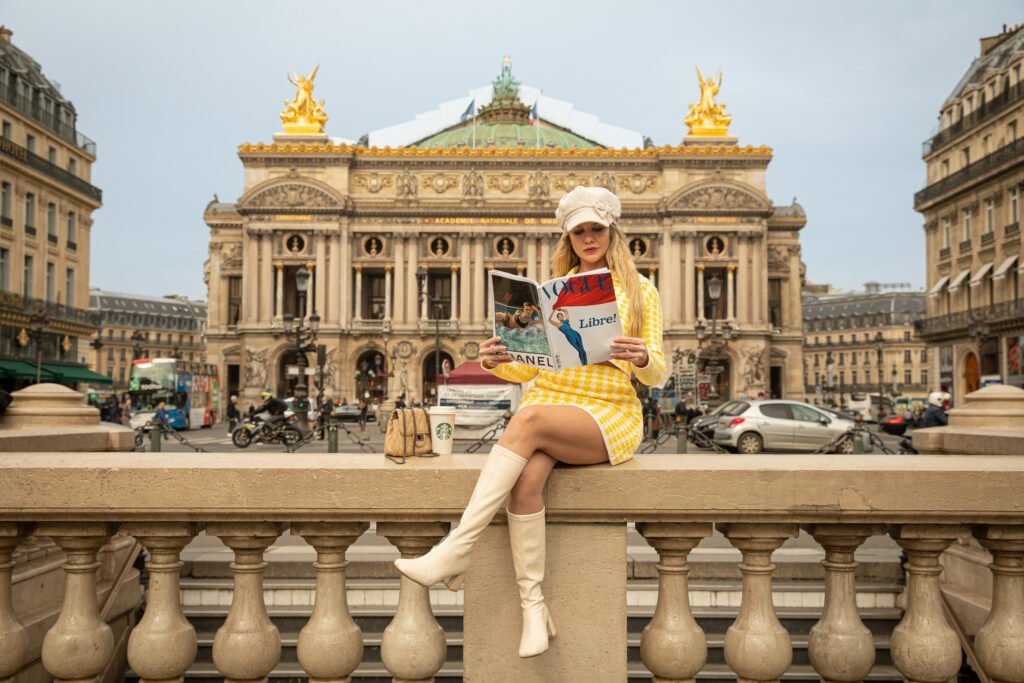
It is one of the questions we hear most often before a session in the French capital: do you actually need a permit for a photoshoot in Paris? The short and reassuring answer is that, for the vast majority of the couples, solo travellers, families and brides-to-be we photograph, the answer is no. A relaxed portrait walk with a photographer and a small camera bag is, in practice, treated very much like any other visitor enjoying the city. But the honest, complete answer has a few more layers, because "a photoshoot" can mean anything from two people strolling along the Seine to a fashion crew of twenty with lighting rigs, generators and a road closure. Those two situations are not governed by the same rules.
In this guide we want to walk you through what we have learned from years of working on the streets, bridges, gardens and rooftops of Paris. We will explain the general distinction between personal photography and professional or commercial productions, where tripods and drones fit in, how specific landmarks such as the Trocadéro, the museums and the Eiffel Tower are usually approached, and why the timing of your session can quietly solve most potential problems before they ever arise. We write this as working photographers, not as lawyers, so please read it as friendly, practical orientation rather than a legal ruling. For anything commercial or large-scale, we will always point you toward the official sources, because regulations can change and every production is different.
The big picture: personal photography vs. professional productions
The most useful mental model is to stop thinking about "cameras" and start thinking about "footprint". French public space, like public space in most cities, is generally open to people taking photographs for their own private, personal use. When you wander the quays with a friend who happens to be a photographer, you are not obstructing anyone, you are not occupying the space in a way that excludes others, and you are not turning a public monument into a film set. That kind of activity is, in everyday practice, simply part of the life of the city. Millions of visitors do it every single day.
The picture changes when a shoot starts to take up space, time and infrastructure that affects everyone else. A professional production that closes off part of a street, that brings heavy equipment, that sets up large lighting stands and reflector frames, that occupies a location for hours, or that films for a commercial campaign is a different animal entirely. At that point the city, or the body that manages the particular site, has a legitimate interest in knowing who is there, when, for how long, and with what. This is where authorizations, filming permits and sometimes fees enter the conversation.
So the practical dividing lines that matter are usually some combination of the following:
- Purpose — is this a personal keepsake, or a commercial project intended to sell a product, brand or service?
- Footprint — how much physical space and public disruption does the setup create?
- Equipment — a mirrorless camera and a lens, or truck-loads of lighting, generators and grip gear?
- Crew size — a photographer and their subjects, or a full team of assistants, stylists and production staff?
- Location — general public streets, or a specific managed site with its own house rules?
Our portrait sessions sit firmly on the light end of every one of those spectrums, which is exactly why they so rarely raise any permit questions at all.
What "commercial use" really means here
There is a common source of confusion worth clearing up. Clients sometimes worry that because they are paying a professional photographer, their session automatically counts as "commercial" and therefore needs a permit. That is not how the distinction usually works. The relevant question is not whether the photographer is a professional; it is what the images are for and how the shoot occupies the space.
A couple hiring us to create beautiful portraits of their anniversary trip is producing personal images, even though we are professionals being paid for our craft. A brand hiring a team to shoot an advertising campaign in front of a monument, with the express intention of using those images to market a product, is doing something commercial that may well require prior authorization from the relevant authorities or site managers. If your project falls into that second category, we strongly encourage you to plan ahead and confirm requirements directly with the official bodies involved, because the rules and any fees will depend on the exact site and use.
Tripods, lighting and equipment: the footprint question in practice
Equipment is one of the clearest triggers for stricter rules, and tripods are the classic example. In many public spaces a photographer holding a camera is unremarkable, but the moment a tripod goes up, some sites treat it differently. A tripod signals a more static, deliberate, "set up shop" kind of presence, and it can be a trip hazard or an obstruction in crowded areas. Certain gardens, esplanades, museums and interior spaces restrict or prohibit tripods and monopods, sometimes seasonally, sometimes all year, and sometimes only in specific zones. Rules can also vary between the outdoor grounds of a site and its interiors.
The same logic applies to lighting. Handheld or on-camera flash used discreetly is one thing; large standing strobes, softboxes, C-stands and light modifiers that occupy a metre or two of ground are quite another. They increase your footprint, they draw attention, and they are more likely to require prior arrangement at managed locations.
Here is how we tend to keep things smooth in practice:
- We work light and mobile, favouring natural light and fast lenses so we rarely need to plant heavy gear.
- We stay aware of foot traffic and never block walkways, doorways, staircases or emergency access.
- Where a tripod or larger setup would be restricted, we adapt the approach rather than force the equipment.
- We move through several spots in a single session instead of camping in one place for a long time.
Because a guided portrait session is built around agility rather than a fixed studio setup, most of the equipment-based restrictions simply never come into play. If you are curious about how we plan a route across the city, our guide to the best photo spots in Paris shows the kind of light-footprint itinerary we love.
Drones: the simple rule is no
Let us be very direct about this one, because it is the area where people most often get into real trouble. You should not plan to fly a drone over central Paris for your photoshoot. Dense urban airspace over the capital is heavily restricted, and flying camera drones over the city, its monuments and its crowds is not something a visitor can simply decide to do. Attempting it can carry serious consequences.
We never incorporate drone footage into our city-centre sessions, and we would gently but firmly steer any client away from the idea. If aerial imagery is essential to a professional project, that is precisely the kind of specialised production that must be arranged through the proper official channels well in advance, with the appropriate authorizations. For a personal portrait session, ground-level photography gives you everything you want anyway: the textures of the stone, the light on the river, the intimacy of a real moment in a real place.
Specific places and their own rules
Beyond the general street-level picture, individual landmarks and managed sites often have their own conventions. We describe these in general terms because the precise details can change and are set by each site, so treat this as orientation and always verify current rules for any specific commercial plan.
The Trocadéro esplanade and open public viewpoints
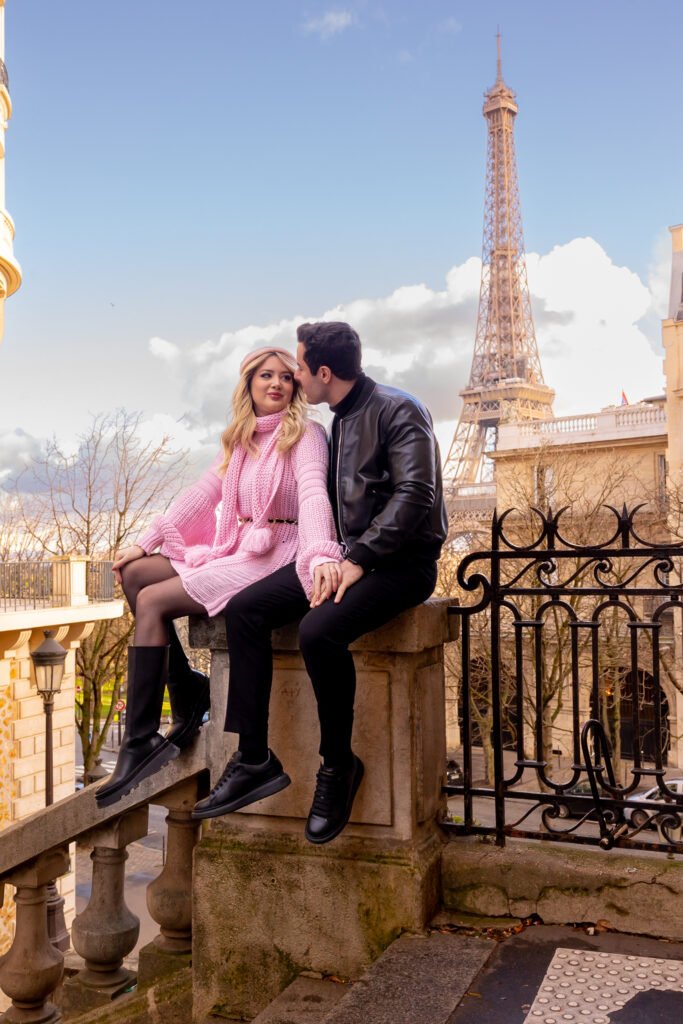
The Trocadéro esplanade, with its postcard view across to the Eiffel Tower, is one of the most photographed spots on earth. For a personal portrait session, it is generally approached like any other busy public viewpoint: people take photos there constantly. The main considerations are practical rather than bureaucratic. It gets extremely crowded, it is a large open space where large productions would be more conspicuous, and courtesy toward the crowds and other visitors matters. This is a place where arriving early, before the crowds build, transforms the experience entirely.
Museums and interiors, including the Louvre
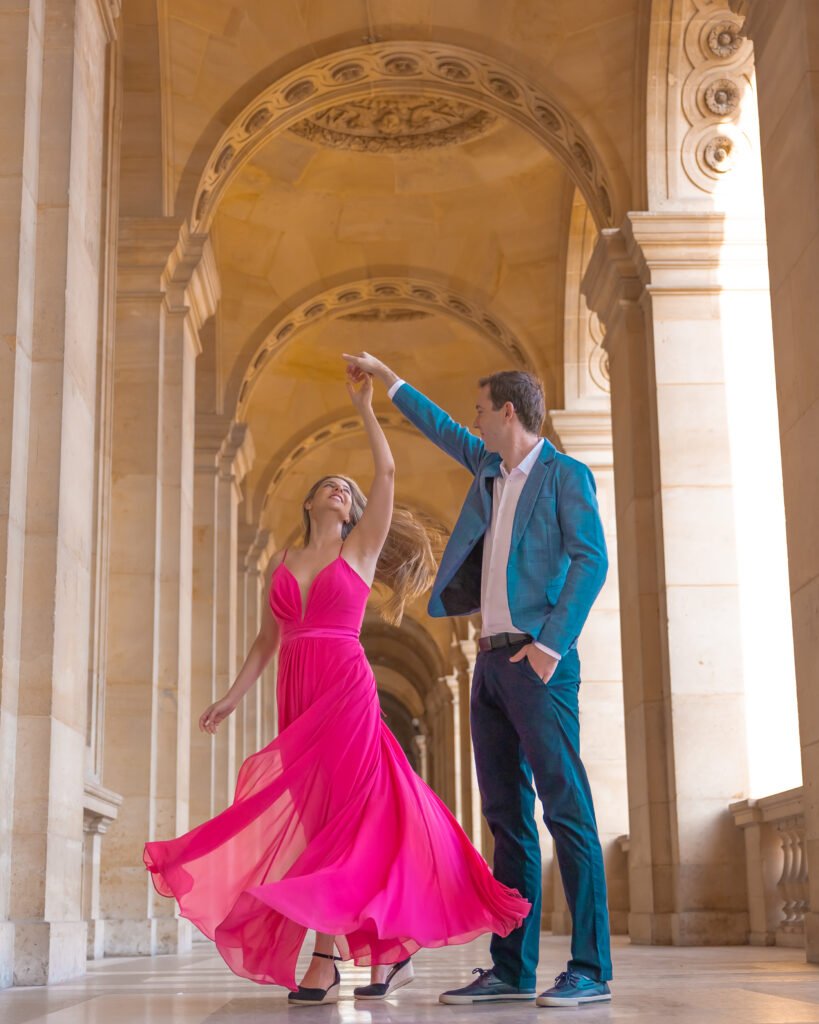
Interiors are a different world from open streets. Museums, historic buildings, churches and other indoor sites set their own photography policies, and these can be quite specific. Some allow personal photography without flash; some restrict tripods and lighting entirely; some designate certain rooms or works where photography is limited; and some require prior arrangement for any professional shoot. A place like the Louvre, and museum interiors generally, should be treated as governed by house rules that you check in advance, rather than assumed to be as open as a public square outside. When we plan sessions, we tend to keep the camera work to the exterior public spaces and the architecture around such sites, precisely because the interiors carry their own layer of permissions.
Gardens and parks
Formal gardens and parks are beloved backdrops, and for a couple or a family taking personal portraits they are usually welcoming. That said, some gardens post their own rules, particularly around tripods, professional-scale setups, and staying off protected lawns and flowerbeds. Seasonal events, maintenance and special installations can also temporarily change what is possible. We keep to the paths, respect the plantings, and read the space as we find it on the day.
The Eiffel Tower and the night-lighting convention
The Eiffel Tower deserves its own note, and not only because it is the star of so many sessions. There is a widely observed convention regarding the tower's illuminations: while the daytime image of the tower is treated very freely, the nightly lighting display is considered an artistic work with its own image rights, and the commercial use of photographs featuring the illuminated tower at night is generally understood to require permission from the body that manages it. For personal photos and private memories, people photograph the sparkling tower all the time; the sensitivity is specifically around commercial publication of the night lighting.
For a personal portrait session, this rarely poses any obstacle, but it is genuinely useful to understand if you ever intend to use images commercially. We cover how we work around and with the tower itself, from the surrounding gardens to the bridges with a clear line of sight, in our dedicated Eiffel Tower photoshoot guide. If your heart is set on the tower as your backdrop, that piece will help you picture the possibilities.
Private venues, courtyards and rooftops
Anywhere privately owned, be it a hotel, a rooftop bar, a historic courtyard, a boutique or a restaurant, operates on permission rather than public access. There, the question is not a city permit at all; it is simply whether the owner or manager agrees to host your shoot, and on what terms. Some venues welcome it warmly, some charge a location fee, and some prefer not to. For our sessions we either keep to freely accessible public settings or arrange access with a venue ahead of time, so there are no awkward surprises on the day.
Why a small guided portrait session usually avoids permit issues
If you have read this far and are wondering where your own dream session lands, here is the comforting summary. The kind of work we do, a guided portrait session for two people, a family, a solo traveller or a bride in a beautiful gown, is designed from the ground up to be light, respectful and mobile. That design is not accidental; it is exactly what keeps sessions simple and stress-free.
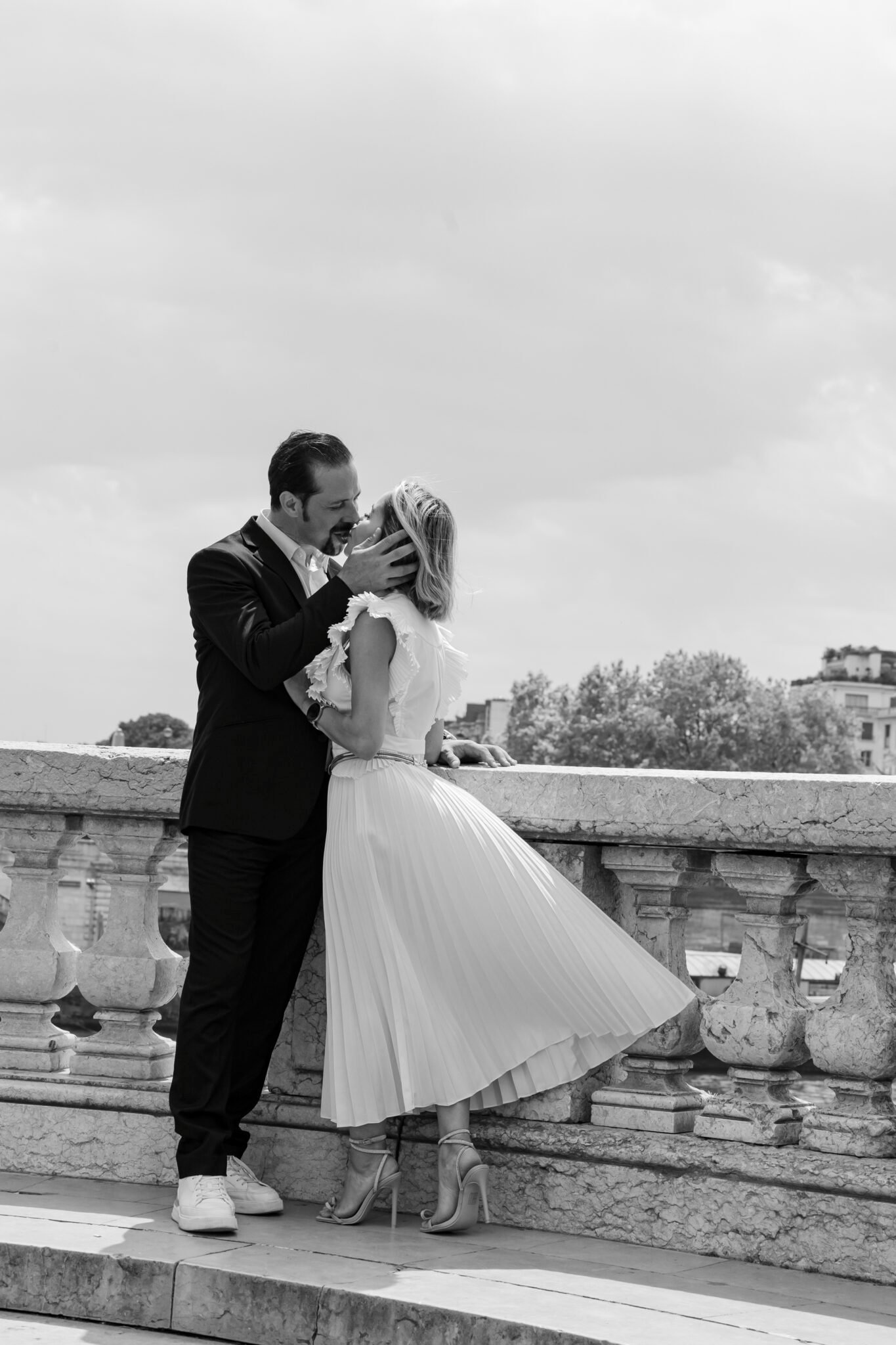
Consider what a session with us actually involves. It is a photographer and you. We carry a compact kit. We do not close streets, run generators or erect scaffolding. We move fluidly from one spot to another rather than occupying a single square for hours. We produce personal images that celebrate your trip and your story. Every one of those characteristics places us firmly in the everyday, personal-photography category that public Paris accommodates so gracefully.
Even our flying dress sessions, which look wonderfully dramatic with metres of flowing fabric catching the wind, are still fundamentally light-footprint portrait shoots: one photographer, one subject, one gorgeous gown, and a good eye for the wind and the light. The drama lives in the styling and the movement, not in a mountain of equipment. You can browse the range of looks and locations we create across our portfolio to see how much variety is possible without ever needing a production crew.
What we take care of so you do not have to
- We choose spots and routes we know are welcoming to relaxed portrait work.
- We read each location on the day and adapt gracefully to crowds, events and conditions.
- We keep our footprint small and our presence courteous toward other visitors.
- We guide you fully in English, French, Portuguese or Spanish, so nothing gets lost in translation.
- We deliver your edited images through a private online gallery, and our work is rated 4.9 stars on Google.
Being a good guest in a living city
There is a dimension to all of this that goes beyond rules, and honestly it matters just as much. Paris is not a theme park; it is a living, working city, and its monuments are shared treasures. The single best way to have a joyful, trouble-free shoot is to move through it as a considerate guest.
In practice that means a few simple habits. We keep walkways clear so pedestrians, cyclists and people with strollers or wheelchairs can pass. We are patient at popular viewpoints, sharing the space rather than monopolising it. We respect barriers, lawns, historic surfaces and any posted signs. We stay attentive to staff and security at managed sites, and we follow reasonable requests without fuss. None of this diminishes the beauty of your photos; if anything, a calm and respectful approach gives us the space to work more creatively.
This mindset also protects the very thing you came for. A rushed, crowded, tense shoot rarely produces the serene, romantic images people dream of. A considerate one, in the right place at the right time, almost always does.
Why early morning is your secret weapon
If there is one piece of advice that solves more potential problems than any other, it is this: book early. The crowds that make certain spots feel complicated, and that draw more scrutiny to anyone occupying space, are overwhelmingly a midday and afternoon phenomenon. In the soft light just after sunrise, the most famous viewpoints in Paris can be almost serene.
Early-morning sessions give you a cascade of advantages at once:
- Space to breathe — iconic spots like the Trocadéro are dramatically emptier, so you are not competing with hundreds of visitors.
- Gentler light — the warm, low, flattering light of early morning is the light photographers dream about.
- A lighter footprint — with fewer people around, a relaxed portrait session is even more clearly just part of the calm morning rhythm.
- Freedom to move — quieter streets and squares mean we can cover more ground and more looks in the same amount of time.
Timing is genuinely one of the most powerful creative tools we have, and it costs nothing but an early alarm. We go deep on this in our guide to the best time for a Paris photoshoot, which is well worth a read as you plan. If you would like to understand what a session with us includes before you choose your slot, everything is laid out transparently on our pricing page.
A quick, honest recap
To bring it all together in plain language: for a personal portrait session with a small kit, you generally do not need a special permit to enjoy the public streets, bridges and open viewpoints of Paris. Permits, authorizations and fees tend to enter the picture when a shoot becomes a larger production, uses heavy equipment or big lighting, occupies space in a disruptive way, moves indoors into museums and private venues with their own rules, or is intended for commercial use. Tripods and large lighting are the classic footprint triggers to watch. Drones over central Paris are effectively off the table for visitor shoots. And the illuminated Eiffel Tower at night carries a well-known image-rights convention that matters mainly for commercial publication.
Because we design our sessions to be light, mobile and respectful, these considerations very rarely touch our clients at all. Where something genuinely does require official permission, especially anything commercial, we will always encourage you to confirm the current rules directly with the relevant authorities and site managers, since we cannot offer legal guarantees and the details do change.
Frequently asked questions
Do I need a permit for a personal photoshoot in Paris?
Generally, no. A personal portrait session with a photographer and a small camera kit in public streets, on bridges and at open viewpoints is treated much like ordinary visitor photography. Permits usually come into play only for larger, commercial or disruptive productions. For anything commercial, we recommend checking official sources directly.
Can I do a photoshoot at the Eiffel Tower?
Yes, personal portrait sessions around the Eiffel Tower and its surrounding gardens and bridges are very common. The main thing to know is the night-lighting convention: the tower's evening illuminations are considered an artistic work, and commercial use of night-lit images is generally understood to need permission. For personal photos, people photograph it freely all the time.
Are tripods allowed in Paris for photography?
It depends on the location. In many open public areas a tripod is fine, but some gardens, esplanades, museums and interior sites restrict or prohibit tripods because they increase your footprint and can obstruct others. We work light and mobile, so we rarely rely on a tripod and can adapt where they are not permitted.
Can I fly a drone for my Paris photoshoot?
No. Airspace over central Paris is heavily restricted, and flying camera drones over the city and its monuments is not something a visitor can simply do. We never use drones in city-centre sessions. Any professional aerial project must be arranged through the proper official channels with the correct authorizations.
Does hiring a professional photographer make my shoot "commercial"?
Not by itself. The distinction is about what the images are for and how the shoot occupies space, not whether the photographer is paid. Personal portraits remain personal even when created by a professional. A shoot becomes commercial when the images are intended to market a product, brand or service.
What about photographing inside museums like the Louvre?
Interiors have their own house rules. Museums set specific policies on flash, tripods, lighting and professional shoots, and some rooms or works may be restricted. We treat museum interiors as governed by their own rules to check in advance, and we usually focus our camera work on the exterior public spaces and architecture.
Can we shoot at the Trocadéro?
For a personal session, the Trocadéro esplanade is generally approached like any busy public viewpoint, and people photograph there constantly. The real challenge is crowds rather than paperwork, which is exactly why we love booking it for early morning when it is calm and beautifully lit.
What if I want to shoot at a hotel, rooftop or private courtyard?
Private venues run on permission, not public access. The question there is simply whether the owner or manager agrees to host your shoot and on what terms, which sometimes includes a location fee. We either keep to public settings or arrange venue access ahead of time so there are no surprises on the day.
Are photoshoots allowed in Paris gardens and parks?
Usually, yes, for relaxed personal portraits. Some gardens post their own rules, especially around tripods, larger setups and staying off protected lawns and flowerbeds, and seasonal events can change what is possible. We keep to paths, respect the plantings, and read each space as we find it.
How do you make sure a session goes smoothly without permit trouble?
We design sessions to be light, mobile and respectful: one photographer, a compact kit, no street closures or heavy gear, and a route across welcoming public spots. We stay courteous to crowds and attentive to site staff, and we book early to avoid the busiest hours. That approach keeps the vast majority of permit questions from ever arising.
Can you guarantee everything is legal for my specific project?
We share practical, experience-based guidance, but we are photographers, not lawyers, and we cannot give legal guarantees. Rules change and every production is different. For anything commercial or large-scale, we will always encourage you to confirm current requirements directly with the relevant official authorities and site managers.
What is the best time of day for a Paris photoshoot?
Early morning, without hesitation. Just after sunrise the light is soft and flattering, the famous viewpoints are far emptier, and a relaxed portrait session blends effortlessly into the calm. It is the single easiest way to get dreamy, uncrowded images and sidestep most complications at once.
Let us plan your Paris session
If you are dreaming of portraits in the most beautiful city in the world, we would love to guide you, from choosing the right spots and the right hour to delivering your gallery of finished images. We will handle the local know-how so you can simply enjoy the moment. Whenever you are ready, take a look at how our sessions work and reach out, and let us create something you will treasure long after the trip is over.