
One of the first questions we hear from clients is deceptively simple: "When is the best time for a Paris photoshoot?" The honest answer is that Paris is photogenic in every season and at almost every hour — but the light, the crowds, and the mood change dramatically depending on when you press the shutter. A sunrise session at the Trocadéro in May feels like a different city than the same spot on a July afternoon. As photographers who shoot in Paris year-round, we plan around these rhythms every week, and in this guide we share exactly how we think about timing so your session looks effortless.
Below you will find our complete approach: the best time of day and the why behind golden hour, a month-by-month and season-by-season breakdown, how sunrise and sunset shift across the year, weekday versus weekend strategy, planning around the famously changeable Paris weather, and the ideal timing for each type of session — flying dress, couple, family and quinceañera. Let's begin.
The best time of day for a Paris photoshoot
If we could give you only one piece of advice, it would be this: shoot early. The hours around sunrise and the first golden light are, without exception, the most flattering and the least crowded windows of the entire day. Here is how we break the day down.
Sunrise and early morning: the crowd-free hour
Paris landmarks are magnets for tourists. By mid-morning, the esplanade of the Trocadéro, the steps of Montmartre and the bridges over the Seine are dense with visitors, tour groups and street vendors. Arrive at sunrise, however, and you may have the Eiffel Tower almost entirely to yourself. This is the single biggest reason we recommend early sessions: an empty Trocadéro is not just prettier, it is calmer. You are not weaving between selfie sticks, you are not waiting for a clear frame, and you can move slowly and intentionally.
The light at this hour is soft, cool and directional. Long shadows stretch across the cobblestones, the sky often carries pastel gradients, and the whole city feels hushed. For clients who feel nervous in front of the camera, the quiet of early morning is a gift — there is no audience, so it is far easier to relax and be yourself. If you can commit to one early wake-up call during your trip, make it count with your photoshoot. Many of the images in our portfolio were made in this precious first hour.
Golden hour: why photographers chase it
"Golden hour" refers to the roughly hour-long window just after sunrise and just before sunset, when the sun sits low on the horizon. The why is physics: when the sun is low, its light travels through more of the atmosphere, which scatters the cooler blue wavelengths and leaves behind warm gold and amber tones. That low angle also means the light is soft and wrapping rather than harsh and top-down.
The practical effect is transformative. Golden-hour light flatters skin, softens fine lines, adds a gentle glow to hair and fabric, and creates a warm, romantic atmosphere that midday light simply cannot reproduce. Backlighting at this hour produces that dreamy halo and lens flare you see in the most magazine-worthy images. This is why golden hour is the cornerstone of nearly every session we plan — it is doing half of the creative work for us. For flowing gowns in particular, the warm backlight turns fabric almost luminous.
Blue hour and after dark
The "blue hour" is the short window after sunset (and before sunrise) when the sun is below the horizon but the sky still glows a deep, saturated blue. In Paris this is magical because the city's monuments begin to illuminate while there is still colour and detail in the sky — the balance between the artificial warm lights and the cool blue heavens is exquisite. Slightly later, full darkness brings the Eiffel Tower's hourly sparkle (five minutes of glittering lights every hour after nightfall), which makes for unforgettable couple portraits.
What about midday?
Midday is the hour we most often steer clients away from. On a clear day, the overhead sun casts hard shadows under the eyes and nose, colours look flat and contrasty, and the light is unforgiving. It is also the peak of the tourist crush. That said, midday is not useless: on a lightly overcast day the cloud cover acts as a giant softbox, and shaded courtyards, covered passages and gardens can be shot beautifully at any hour. If your schedule only allows a midday session, we simply choose locations that work with the light rather than fighting it.
Month-by-month guide to photoshoots in Paris
Paris has four genuine seasons, and each rewrites the backdrop. Here is our month-by-month view of light, weather, crowds and wardrobe so you can match the city's mood to your vision.
- January — The quietest month. Cold, often grey, sometimes crisp and clear with beautiful low winter light that stays gentle all day. Landmarks are at their least crowded, so you have space to breathe. Bare trees and moody skies suit dramatic, editorial portraits. Dress warm: coats, wool, gloves and boots become part of the styling. Christmas lights may still linger in the very first days.
- February — Still cold and low-crowd, with the first hint of the year lengthening. A romantic month around Valentine's Day for couples. Expect variable skies. Layered winter wardrobe with elegant coats photographs wonderfully against the pale light.
- March — The turn of the season. Early blossoms appear, days lengthen noticeably, and the light softens. Weather is unpredictable — sun and showers in the same afternoon — so we plan flexibly. A lovely, fresh, uncrowded time before the spring rush.
- April — Peak spring and one of our favourite months. Cherry blossoms and magnolias bloom (often late March into April, depending on the year) around spots like the Trocadéro gardens, Notre-Dame and parks across the city. Fresh green, flowering trees, mild temperatures and soft light. Crowds start to build but are still manageable. Pastels and light layers suit the season; bring a jacket for cool mornings.
- May — Arguably the most beautiful month in Paris. Gardens are in full bloom, the light is long and golden, temperatures are pleasant and the city feels alive. It is popular, so early sessions are essential to beat the crowds. Flowing dresses, florals and light fabrics shine.
- June — The longest days of the year. Sunrise is very early and sunset very late, which gives an extended golden hour but demands early starts or late evenings. Warm, green, festive and busy. Perfect for airy summer wardrobes.
- July — High summer. Long, warm days and the most tourists of the year. Landmarks are packed from mid-morning until evening, making sunrise sessions almost mandatory for clear frames. Bright light and blue skies; midday can be harsh. Light, breathable clothing and sun protection.
- August — Also very warm and busy with visitors, though many Parisians leave the city on holiday, which softens the local bustle in some neighbourhoods. Similar strategy to July: shoot early, dress light, hydrate.
- September — A sweet spot. Summer warmth lingers but crowds thin as the holidays end, the light takes on a golden quality, and the weather is often stable and mild. Highly recommended for comfortable, glowing sessions. Transitional wardrobe of light layers works beautifully.
- October — Autumn arrives in earnest. Golden and amber foliage in the parks and along the avenues, cooler air, and warm low light. One of the most photogenic months for colour, with moderate crowds. Rich tones, knits, coats and boots complement the season.
- November — Late autumn moving toward winter. Bare branches, atmospheric mist, dramatic skies and the quiet return of low-season calm. Days shorten quickly. Moody and cinematic; warm layers essential. The Christmas markets and lights begin to appear toward month's end.
- December — Festive Paris. Christmas lights on the Champs-Élysées, decorated shop windows, markets and a magical mood, especially in the evening blue hour. Cold and often grey by day, so we lean into cosy winter styling and twilight sessions. Crowds gather around the festive attractions but many photo spots stay calm early.
Season by season: light, weather, crowds and wardrobe
Spring (March–May): blossoms and fresh light
Spring is a favourite for good reason. The city bursts into bloom — cherry blossoms, magnolias, tulips and wisteria appear across gardens and along the river — and the light is soft, clean and forgiving. Temperatures are mild, though mornings stay cool and rain showers are frequent, so we always keep a backup plan. Crowds grow from April onward, which makes early-morning slots increasingly valuable. Wardrobe leans pastel and floaty: light dresses, soft knits, a jacket for the chill. For anyone dreaming of blossom backdrops, spring is the window, but blossom timing varies by a week or two each year, so we watch the season closely and adjust.
Summer (June–August): long days, big crowds
Summer offers the longest days and the most reliable warm weather, but it also brings the heaviest tourist traffic of the year. The trade-off is real: gorgeous long golden hours in exchange for very early or very late starts to find clear, calm frames at popular landmarks. Midday sun is strong and best avoided for open-air portraits. We favour sunrise sessions in summer almost universally — the light is glorious and the Trocadéro is empty. Wardrobe is light and breathable; think airy fabrics, summer dresses and comfortable footwear for walking on warm cobblestones.
Autumn (September–November): golden colour and calm
Autumn may be the most underrated season for Paris photography. September holds onto summer's warmth while the crowds recede, and October dresses the parks in gold, amber and copper. The low autumn sun produces long, warm golden hours, and the cooler air makes walking sessions comfortable. Weather becomes more variable as November approaches, with atmospheric mist and dramatic skies that we love for moody portraits. Wardrobe embraces richer tones, knits, coats, scarves and boots — clothing becomes part of the styling rather than something to endure.
Winter (December–February): quiet city and festive lights
Winter is cold and often overcast, but it has a distinct charm and the fewest crowds of the year. December glows with Christmas lights and festive markets, ideal for cosy evening and blue-hour sessions. January and February are serene and starkly beautiful, with bare trees and pale, gentle light that flatters editorial portraits. Days are short, so timing is compact — but that also means golden hour arrives at a civilised time rather than dawn. Warm, elegant layering is essential and looks fantastic on camera: tailored coats, wool, gloves and boots. For couples seeking romance and privacy, winter delivers both.
How sunrise and sunset shift through the year in Paris
Paris sits at a northern latitude, which means the length of the day swings widely across the year, and this directly shapes when your golden hour falls. We won't quote exact clock times — they change daily and vary within the city — but the general pattern is essential for planning.
Around midsummer (June), days are very long: the sun rises early in the morning and sets late in the evening, well after most dinners. Golden hour in the evening can fall quite late, which is wonderful for a relaxed sunset session but means an early-morning golden hour requires a genuinely early alarm. Around midwinter (December), the reverse is true: the sun rises late and sets in the late afternoon, so the whole day is compressed. The upside is that winter's golden hour and blue hour arrive at comfortable, sociable times — no dawn wake-up needed.
In spring and autumn, day length sits in between and changes quickly week to week, with sunrise and sunset landing at moderate times that make both morning and evening sessions easy to schedule. A practical note: France observes daylight saving time, shifting clocks forward in late March and back in late October, which nudges golden hour by an hour overnight. When we plan your session, we always check the precise sunrise and sunset for your exact date so we hit the light perfectly — you never have to calculate this yourself.
Weekday versus weekend
Timing is not only about the hour and the season — the day of the week matters too, especially for crowds. Weekdays, particularly Tuesday through Thursday, are generally calmer at major landmarks than weekends. Locals are at work, and while tourists are present year-round, the overall density is lower. Weekends draw both visitors and Parisians out to the parks, markets and riverbanks, so popular spots fill earlier in the day.
Our recommendation: if your schedule is flexible, choose a weekday morning for the calmest experience. If a weekend is your only option, simply start earlier — a Saturday sunrise is still remarkably peaceful because the crowds have not yet arrived. Either way, the early start is your best tool. We help every client pick the optimal day-and-time combination when we plan the session together.
Planning around the weather and rain
Paris weather is changeable in every season, and rain is always a possibility — this is normal and nothing to fear. Over years of shooting here we have learned that flexibility and a good attitude turn weather into an asset rather than an obstacle.
- Overcast skies are your friend. A layer of cloud acts as a giant natural softbox, producing even, flattering light with no harsh shadows. Some of our most elegant portraits were made under grey skies.
- Light rain can be romantic. Wet cobblestones reflect the city lights, umbrellas add a stylish prop, and covered passages, arcades and grand doorways offer dry, atmospheric backdrops. A little drizzle rarely stops us.
- We build in flexibility. When possible we watch the forecast and keep an alternative window or a sheltered location in reserve, so a rainy morning does not derail your plans.
- Layers and props help. A beautiful coat, an umbrella or a wrap can be styled into the shoot, keeping you comfortable and adding to the look.
The key is to treat the forecast as guidance, not a verdict. Because we know the city's sheltered corners and how to work with soft light, we can create beautiful images in almost any conditions. If weather looks genuinely severe, we discuss options together in advance.
Best timing for each type of session
Different sessions have different ideal windows. Here is how we think about timing for the styles we shoot most often. For a deeper look at locations to pair with these times, see our guide to the best photo spots in Paris.
Flying dress sessions
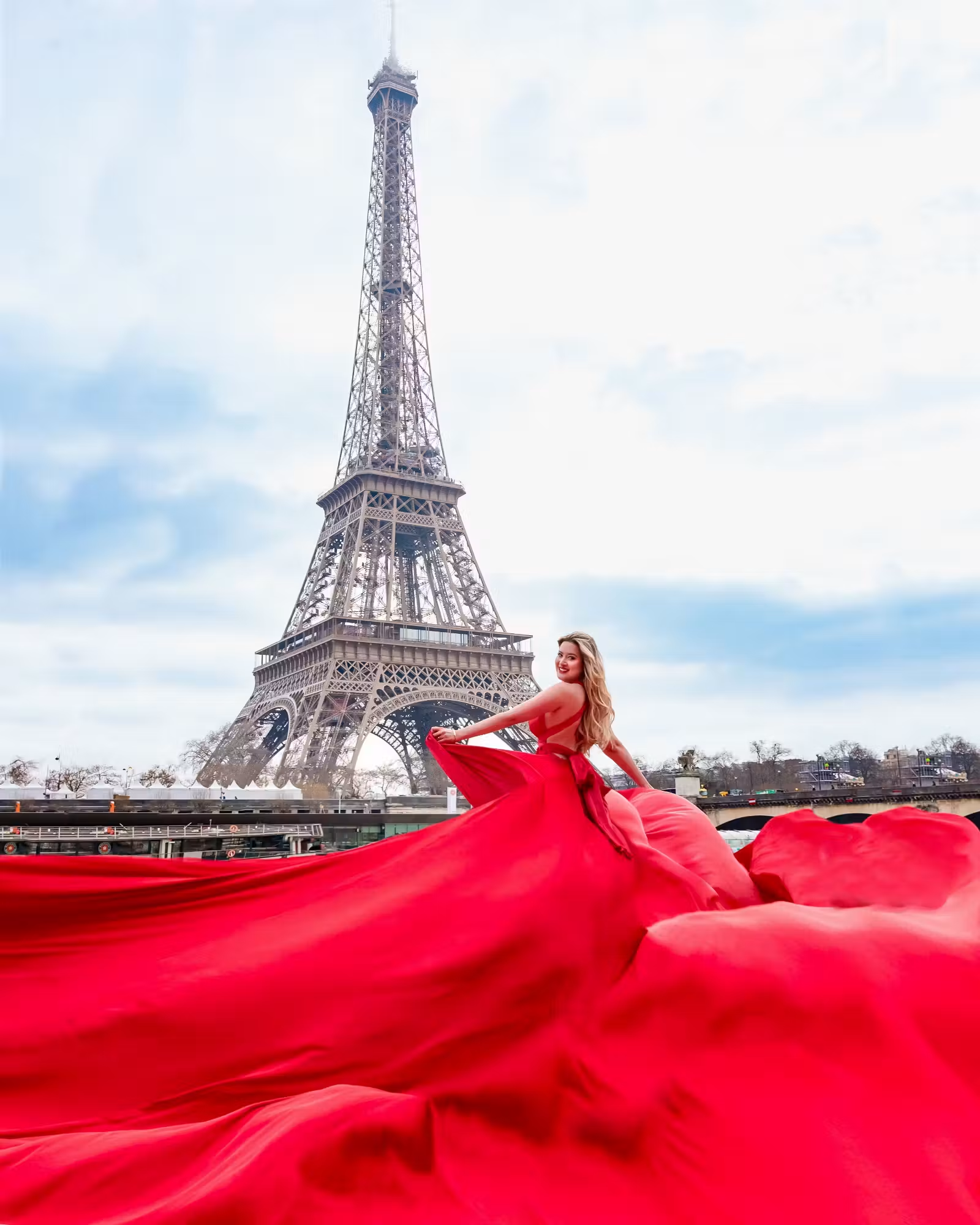
A flying dress session lives or dies by two things: light and space. The long, voluminous gowns need room to be tossed and to billow dramatically, and they look most magical when backlit by warm, low sun. That makes sunrise the ideal window — you get golden light streaming through the fabric and, crucially, an empty esplanade where an assistant can throw the dress without a crowd in the frame. Late spring through early autumn offers the warmest, longest golden light for flowing fabric, but with an early start these sessions work beautifully year-round. Because the dress catches the wind, we also keep an eye on the breeze, which sunrise conditions often provide gently.
Couple sessions
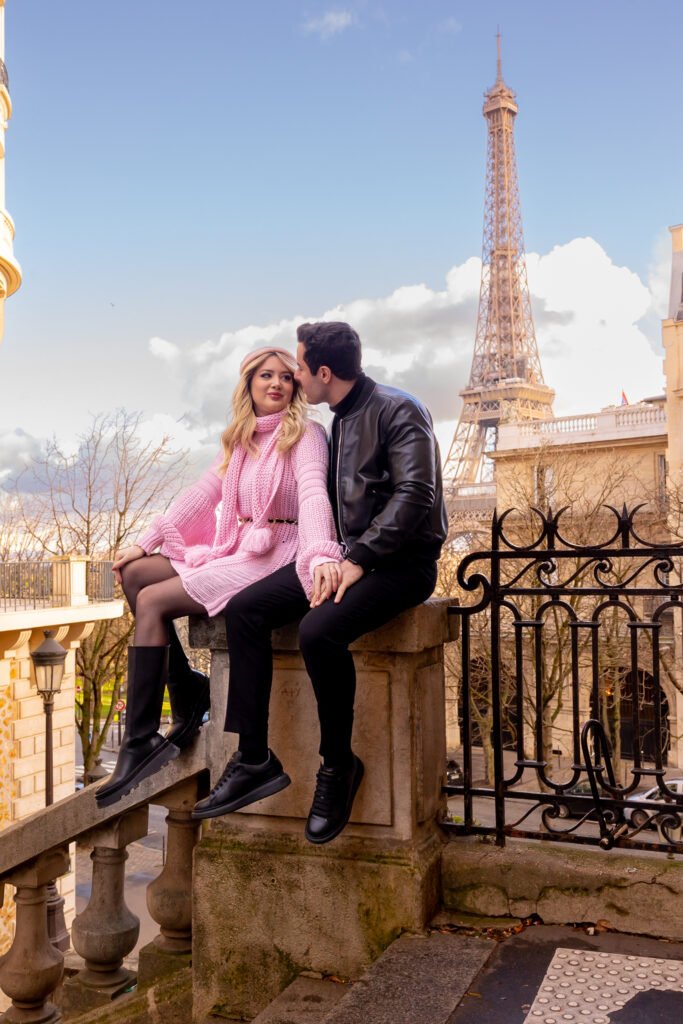
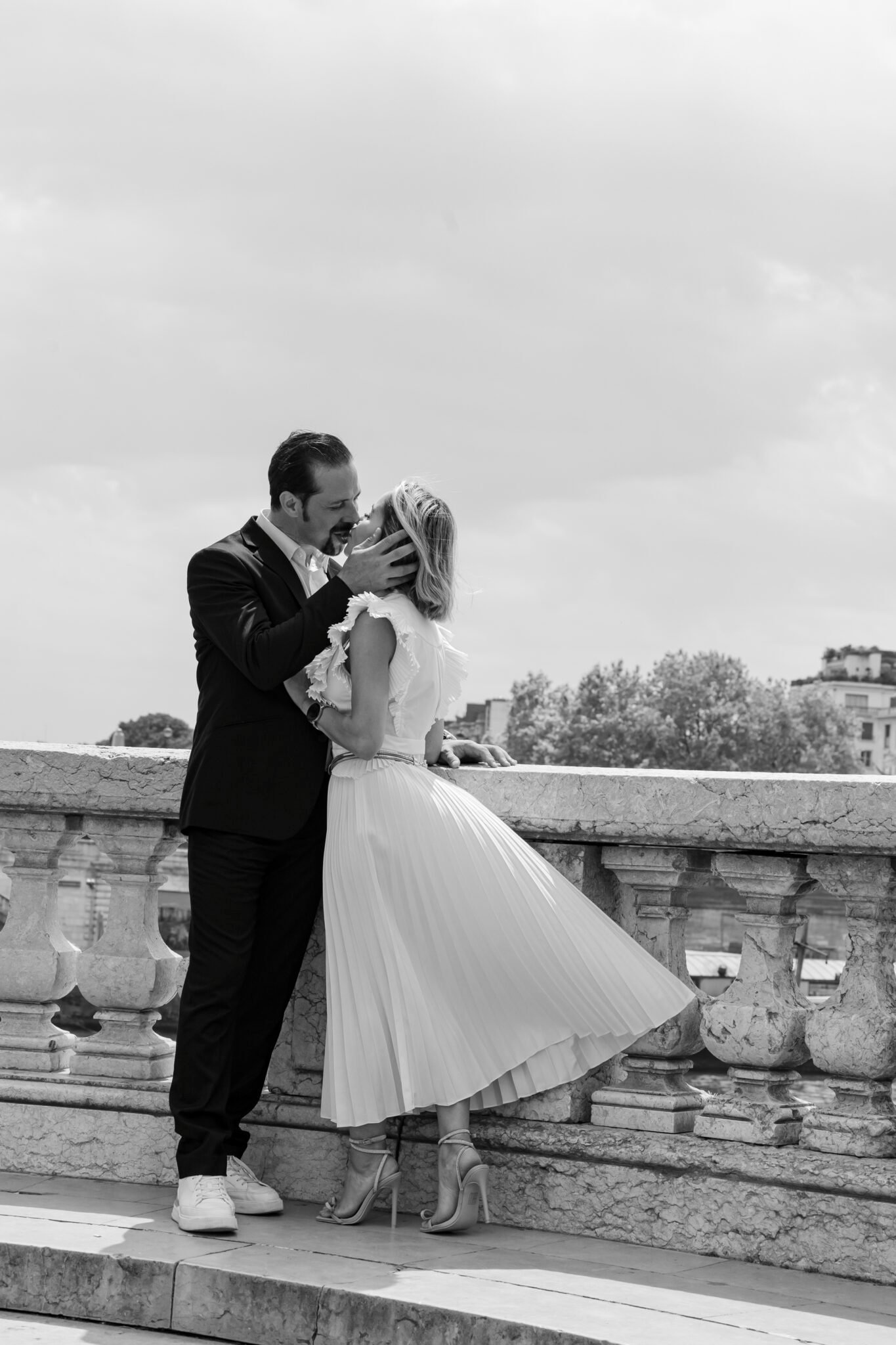
For a couple session, romance is everything, and few things are more romantic than golden or blue hour in Paris. Sunrise offers intimacy and empty streets — perfect for couples who want a private, unhurried feel. Sunset and the blue hour that follows deliver warm glow transitioning into the sparkle of the illuminated Eiffel Tower, which is spectacular for engagements and honeymoons. Autumn and winter evenings are especially cosy and atmospheric for couples. We often suggest starting at golden hour and continuing into blue hour to capture both moods in one session.
Family sessions
Families, especially those with young children, need timing that respects real life. While golden hour gives the prettiest light, the most important factor for families is the children's rhythm — a well-rested, well-fed child photographs far better than a tired one. Early morning often works wonderfully because little ones are fresh and the locations are calm and safe, without dense crowds to manage. Mild seasons like late spring and early autumn keep everyone comfortable. We keep family sessions relaxed and efficient so the experience is joyful rather than stressful.
Quinceañera sessions
A quinceañera session celebrates a milestone, and the imagery should feel grand and luminous. Golden hour is ideal, giving the formal gown a radiant, fairy-tale glow. As with flying dress sessions, an early start keeps the iconic backdrops clear so the young woman is the unmistakable star of every frame. Spring and autumn provide gorgeous seasonal colour — blossoms or golden foliage — that complements a formal dress beautifully. We plan these sessions carefully so the timing showcases both the gown and the city.
Putting it all together: our simple planning framework
When we help a client choose a time, we weigh four things in this order: the light you want (golden hour is almost always the answer), the crowds you want to avoid (favour early morning and weekdays), the season's mood (blossoms, summer green, autumn gold or festive lights), and your practical comfort (weather, children's schedules, your own energy). Balance those and the "best time" becomes clear for your vision.
If we had to summarise in one line: an early-morning session at golden hour, on a weekday, in late spring or early autumn is the closest thing to a universally perfect Paris photoshoot. But every season offers something special, and part of our job is matching the calendar to the story you want to tell. When you are ready, we also share honest, transparent guidance on options and pricing, and we will help you pick the exact date and hour that best suit your session — no guesswork required.
Frequently asked questions
What is the overall best time for a Paris photoshoot?
For most people, an early-morning golden-hour session on a weekday in late spring (May) or early autumn (September) offers the ideal combination of soft light, pleasant weather and manageable crowds. That said, every season has its own beauty, and the truly best time depends on the mood you want.
What is golden hour and why does it matter so much?
Golden hour is the roughly one-hour window just after sunrise and just before sunset when the sun is low. Its light is warm, soft and directional, which flatters skin, adds a glow to hair and fabric, and creates a romantic atmosphere. It is the single biggest factor in beautiful outdoor portraits, which is why we plan most sessions around it.
Should I really wake up for a sunrise shoot?
If you want empty landmarks and the softest light, yes. Sunrise sessions give you an almost crowd-free Trocadéro and Eiffel Tower, calm streets, and gorgeous early light. It is the best trade you can make for magazine-quality images, and it is especially worth it in busy summer months.
Which months have cherry blossoms in Paris?
Cherry blossoms and magnolias typically bloom from late March into April, though the exact timing shifts by a week or two each year depending on the weather. If blossom backdrops are your dream, plan for early-to-mid spring and stay flexible, as nature sets the schedule.
Is summer a good time for a photoshoot in Paris?
Summer offers long, warm, sunny days and lush green surroundings, but it also brings the biggest crowds and strong midday sun. It is a lovely time to shoot as long as you start at sunrise to beat the tourists and avoid harsh light in the middle of the day.
What about winter — is it too cold and grey?
Winter is cold and often overcast, but it is also the quietest season and full of charm. December glows with Christmas lights, and January and February offer serene, uncrowded landmarks with soft light. With warm, elegant layering, winter sessions are cosy, romantic and beautifully atmospheric.
Does the day of the week matter?
Yes. Weekdays, especially Tuesday through Thursday, are generally calmer at major landmarks than weekends. If you can only shoot on a weekend, starting at sunrise keeps things peaceful because the crowds have not yet gathered.
What happens if it rains?
Rain is rarely a dealbreaker. Overcast skies give soft, even light, light drizzle can look romantic with wet reflections and umbrellas, and Paris has many covered arcades and grand doorways for shelter. We build in flexibility and know the city's sheltered spots, so we can create beautiful images in most conditions.
How do sunrise and sunset times change through the year?
Because Paris is at a northern latitude, days are very long in June (early sunrise, late sunset) and short in December (late sunrise, early sunset). Spring and autumn fall in between. France also changes clocks for daylight saving in late March and late October. We always check the exact times for your date so we hit the light perfectly.
When is the best time for a flying dress session?
Sunrise is ideal. You get warm backlight glowing through the fabric and an empty esplanade with room to toss the dress dramatically. Late spring through early autumn offers the longest golden light, but with an early start these sessions work year-round.
What is the best time for family sessions with children?
Early morning usually works best because children are fresh and the locations are calm and safe. While golden light is prettiest, the child's rhythm matters most — a rested, happy child photographs far better than a tired one. Mild seasons keep everyone comfortable.
Can you help me choose the exact date and time?
Absolutely. We are happy to guide you in English, French, Portuguese or Spanish, check the precise golden hour for your date, factor in crowds, weather and your session type, and recommend the perfect window. You will also receive your images in a private online gallery, and our clients rate us 4.9★ on Google.
Ready to plan a session that catches Paris at its most beautiful? Tell us your dates and the mood you are dreaming of, and we will help you find the perfect light. We would love to create something timeless with you.